Nordic Skating Boots
Why nordic boots?
Nordic boots are the perfect multi-purpose tool for three outdoor sports: cross-country skiing, ice skating, and off-season roller skiing. Three sports in a single pair of boots is hard to beat.
For ice skating, the following features are highly desirable:
1. A stiff sole for efficient power transfer to the skate blade
2. A stiff and tall upper section, with hard plastic around the outside to support your ankle
3. Plenty of insulation for warmth and comfort
4. Light weight
5. (optional) Traction for walking on slippery slopes
For me, the single best thing about nordic boots is being able to put them on in a warm place and walk or drive to the ice, eliminating the frozen fingers and toes I used to suffer from when I had to change into my skates outdoors.
Once you’re at the lakeshore, it’s easy to step onto your nordic skates and secure the bindings without having to take off your gloves or mittens.
How to try on a pair of boots
1. Always sit down first. Take one boot out of the box and slide your foot into the boot. Then point your toes up at the ceiling and tap your heel on the floor to move your foot all the way into the rear of the boot.
2. Lace up the boot and fasten all buckles and velcro straps before you stand up.
3. When you stand up, make sure your heel is firmly anchored in place, and there’s wiggle room for all your toes. If your heel slides up and down more than half an inch, the boot is probably too big (or too wide). If you can’t wiggle your toes then it’s probably too small (or narrow).
4. Repeat for the other boot. Just because one boot fits doesn’t mean the other will.
Skate and Combi vs. Back Country
I’ve always used recreational skate-ski boots. For me, they’ve offered the perfect combination of comfort, stiffness and ankle support, combined with light weight. So-called ‘combi’ boots are a close second; although a step down in stiffness and ankle support, they are equal to skate boots in comfort and light weight.
The one thing missing from skate boots is traction. They can be very slippery when walking across an icy parking lot. For that reason, skaters who need to walk significant distances gravitate toward back country boots with good hiking soles. This is especially true in Sweden, where skaters use public transportation and they often have to walk the last kilometer from the bus or subway station to the ice. But back country boots are steadily gaining popularity in the USA.
The downside of back country boots is that they’re noticeably heavier. The bindings are also heavier. On a long-distance adventure I don’t want my legs to get tired from having unnecessary weight attached to my feet.
Back country boots used to lack ankle support and stiffness, but great strides have been made in this area, particularly with boots such as the Alpina Alaska. In the future I see back country boots gaining an increasing share of the Nordic skating market. Who knows, maybe someday I’ll get a pair myself.
The Rottefella Xplore System
Alpina and Rottefella have introduced a new automatic step-in back country system that could be a game-changer for Nordic skating. The Alpina Alaska XP boot and Rottefella Xplore binding are at least 20% lighter in weight than their NNN-BC counterparts, but with no loss in stiffness. The Xplore system will undergo rigorous on-ice testing in the 2026-27 season, and I can’t wait to report on the results!
Rottefella SkateX
And as if that weren’t enough, Alpina and Rottefella have also debuted their first boot-binding system designed specifically for skate-skiing. Will the ‘SkateX’ system perform equally well on the ice? And can anbody afford its stratospheric price? Stay tuned…

My Salomon RS Carbon skate boots: Still going strong after 10 years of wild ice skating and skate-skiing.

Alpina Alaska back-country boots: An increasingly popular option for Nordic ice skating
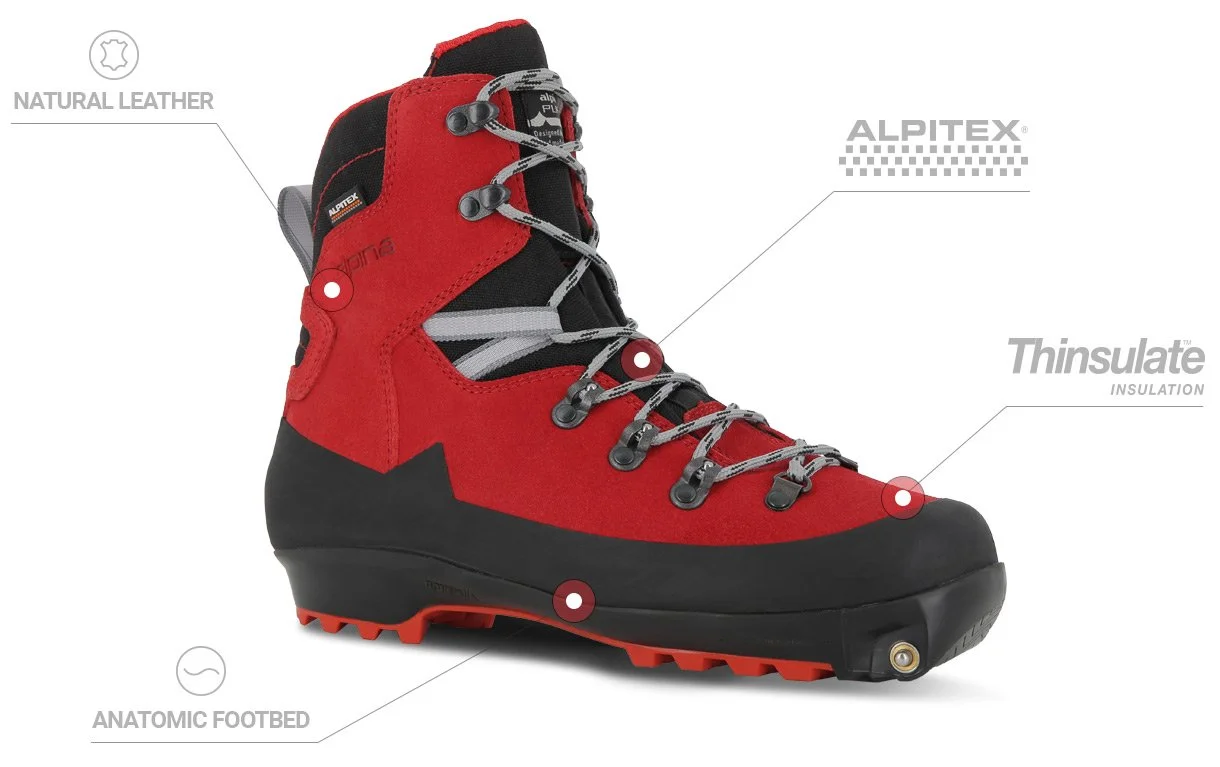
Alpina Alaska boot redesigned for the new Xplore binding. Note the spring pin on the side of the boot sole near the front. This is how the boot locks into the binding.